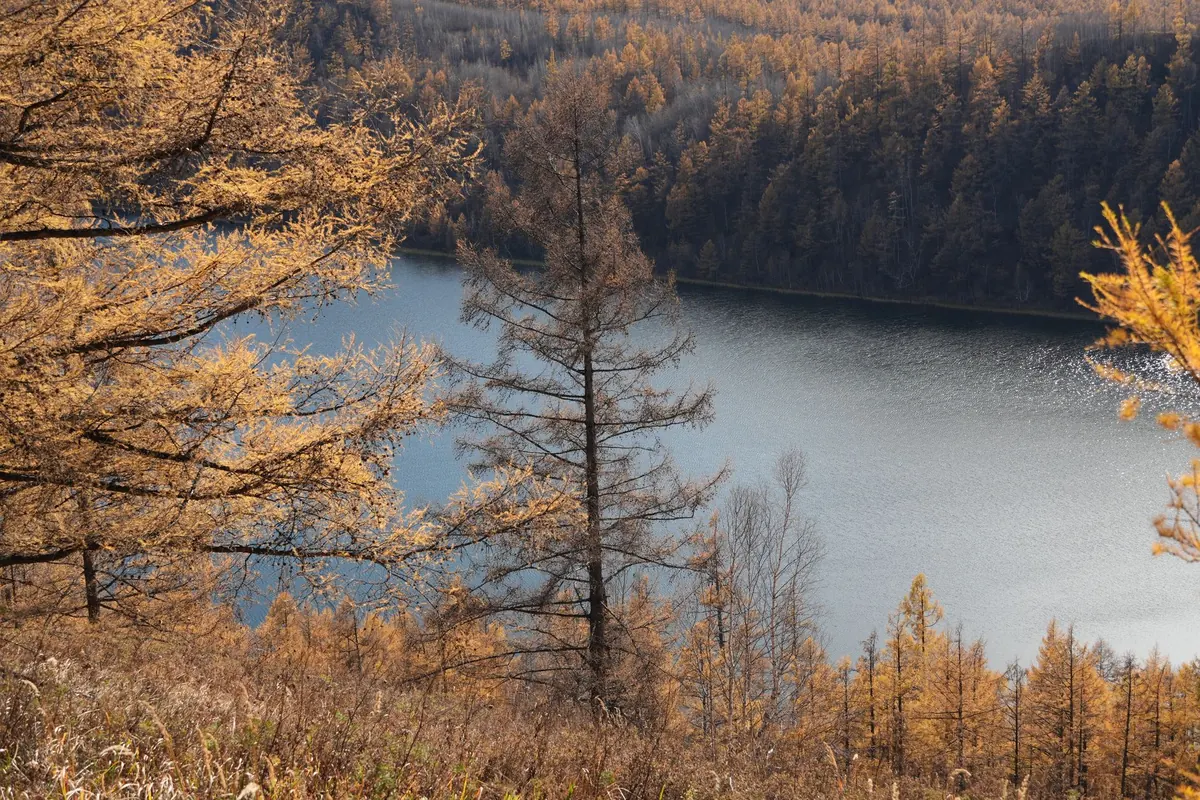
If a stand of larch turns brown in July, that is not autumn arriving early. Larch is deciduous, so its needles do turn gold and fall — but in October, not midsummer. Browning while the needles should still be green is one of the clearest signs that something is wrong, and in Britain the most likely culprit on larch is Phytophthora ramorum.
What Phytophthora ramorum actually is
Despite the way it behaves, Phytophthora ramorum is not a fungus in the strict sense. It is an oomycete, a water mould more closely related to algae and diatoms than to the mushrooms and bracket fungi you might find on a dead stump. That distinction matters in practice, because water moulds thrive in wet, mild weather and travel in moisture — in airborne mist, in splashing rain, in run-off, and in mud or soil carried on boots, tyres and tools.
On rhododendron and many shrubs it causes dieback and cankers. On larch it is more dramatic, and more consequential. Larch is what plant pathologists call a sporulating host: infected needles produce enormous quantities of spores, which can then be carried on the wind to other larch, to rhododendrons, to bilberry and to a range of other plants. An infected larch wood does not simply lose its larch — it becomes a source of infection for the landscape around it. That is why the response in Britain has been so firm.
How to spot it on larch
Crown symptoms
Start by looking at the whole tree, ideally from a distance with binoculars. Affected larch often develop thin, pale crowns well before they die. The earliest reliable sign is wilting and dieback of shoots, usually high in the crown or on one side first. The needles blacken, then drop, leaving bare, dead twigs. Where the terminal shoot of a branch dies, it can curl over in a distinctive hook shape.
Branches and trunk
Move closer and look for cankers: dark, sunken lesions on branches and the main stem, sometimes with resin bleeding from the bark. Peel back or cut into the bark of a dying branch and you may see a sharp line between healthy pale tissue and greyish-brown stained wood beneath. Once a lesion girdles a branch or the stem, everything above it dies.
Signs to look for, in roughly the order they tend to appear:
- Pale, thin or sparse crowns compared with neighbouring trees
- Wilting, blackening needles on individual branches, often high up
- Dead, bare shoots, sometimes hooked at the tip
- Dark, sunken cankers on branches and trunks, occasionally with resin
- Grey-brown staining in the wood beneath the bark
- Whole trees dying and shedding needles out of season
Telling it apart from other problems
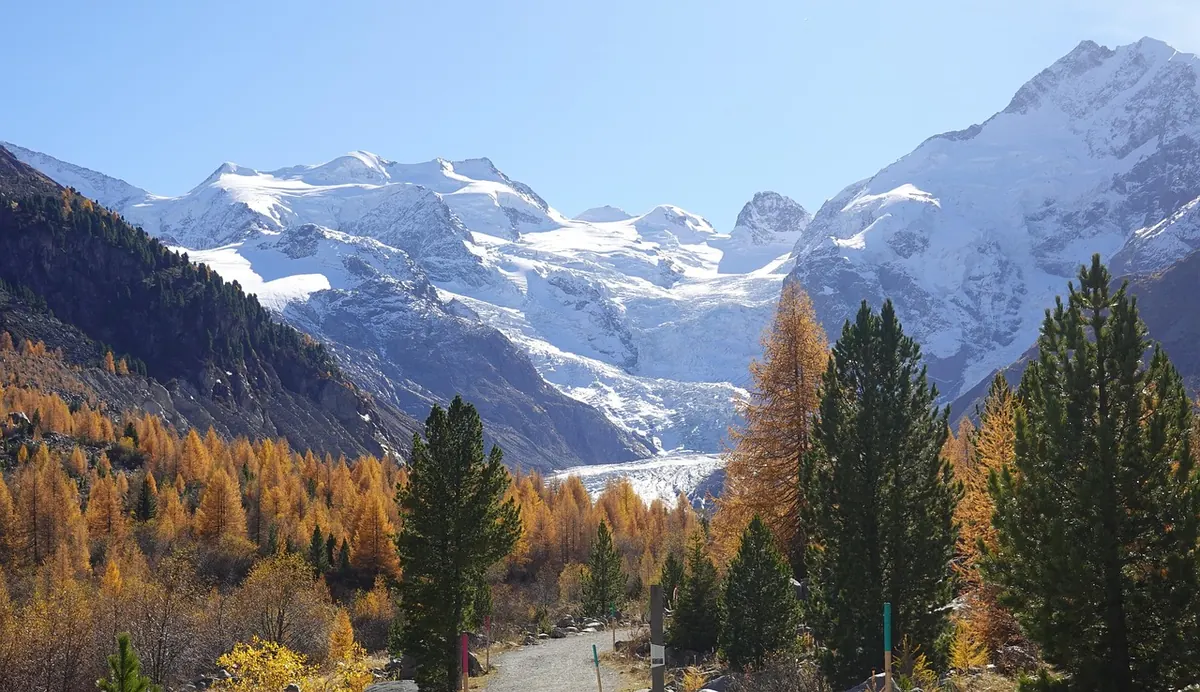
Autumn colour is the obvious confusion. From roughly October, larch needles turn a warm gold and then fall, and a whole wood doing this at once is entirely normal. Disease browning happens while the needles should still be functioning — typically from early summer onwards — and usually starts patchily rather than uniformly.
Other things can also thin a larch wood: drought, waterlogging, root damage, and larch canker caused by Lachnellula willkommii, which produces distinctive cup-shaped fruiting bodies on branches. Phytophthora ramorum can only be confirmed by laboratory testing, so you do not need to be certain. If you are unsure, report it. A false alarm costs a phone call; a missed infection costs a wood.
What it means for British woods
Larch was planted widely across upland Britain, in large conifer blocks and in mixed woods, for its fast growth and durable timber. In the wetter west, losses have been severe, and the standard response from the plant health authorities is a Statutory Plant Health Notice requiring infected trees — and often a buffer of apparently healthy ones around them — to be felled, usually before the next main sporulation period.
The effect on a wood goes beyond losing one species. Felling opens the canopy suddenly, which changes light levels, ground flora and windthrow risk, and removes the dense structure that woodland birds and mammals use. Sound timber can often still be harvested and used, but the movement of logs, brash, bark and soil from an affected site is controlled. Where a notice is served it is a legal requirement, so take advice early from the issuing authority or a qualified forestry consultant.
Reporting a suspected case
In Britain, suspected tree pest and disease problems can be reported through TreeAlert, the online reporting tool run by Forest Research. In Northern Ireland, reports go to DAERA. You will be asked for the location, the tree species, what you saw and, ideally, photographs and a grid reference.
- Note the precise location — grid reference or a dropped pin, plus a description of how to reach the tree.
- Photograph the whole tree, then a close-up of the affected branch and any canker.
- Record the date and describe the pattern: one tree, a group, or a whole stand.
- Do not take cuttings, needles or timber away from the site, and do not post samples without being asked.
- Follow any instructions from the plant health authority promptly.
Biosecurity in practice
Most spread over long distances comes from moving infected plants, timber or soil. On a local scale, mud on boots and tyres does a great deal of damage. The principle is simple: arrive clean, leave clean.
- Brush or knock off mud and leaf litter from boots and clothing before you leave a site, and again before you enter the next one.
- Clean bicycles, quad bikes and vehicle wheels and arches, especially after wet weather.
- Use a disinfectant approved for plant health use, mixed and applied exactly as the label states. Disinfectant works poorly on muddy surfaces, so clean first.
- Keep tools, stakes and fencing materials on site rather than moving them between woods.
- Stay on established paths where you can, and avoid walking through wet, boggy ground where spores move most easily.
- Never take home plants, cuttings, needles or soil from a larch wood.
A short checklist before your next woodland visit
Plan your route so you are not moving from a larch wood straight into a garden or a nursery. Take a stiff brush and, if you carry them, disinfectant and a water container. Look at the larch around you as you walk — crowns first, then branches — and photograph anything that looks wrong while you still have a signal. Report it through TreeAlert or the relevant authority rather than discussing it only online. And if you manage or own the wood, keep a simple record of what you saw and when, because that history is genuinely useful if a plant health officer gets in touch. Larch is not lost in Britain, but every wood that stays clear of Phytophthora ramorum is clear partly because people took the small precautions seriously.
Photo: sergo75-75 / Pixabay