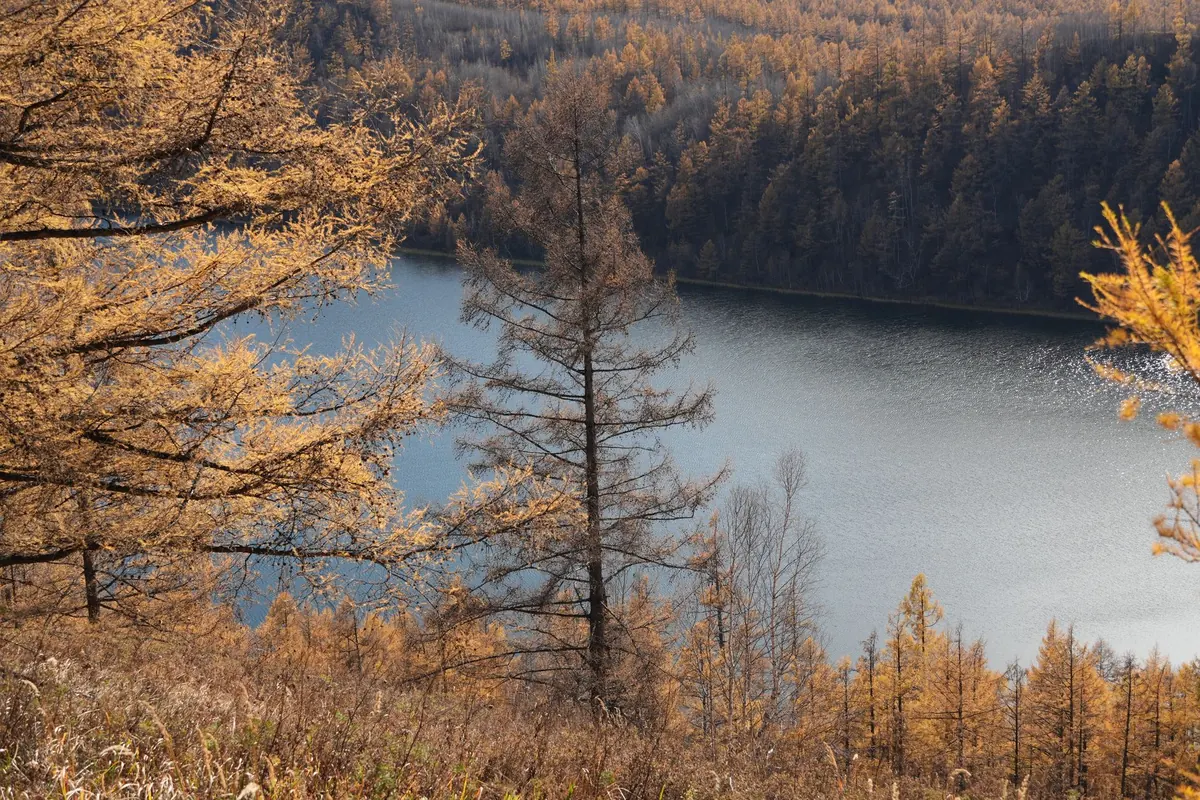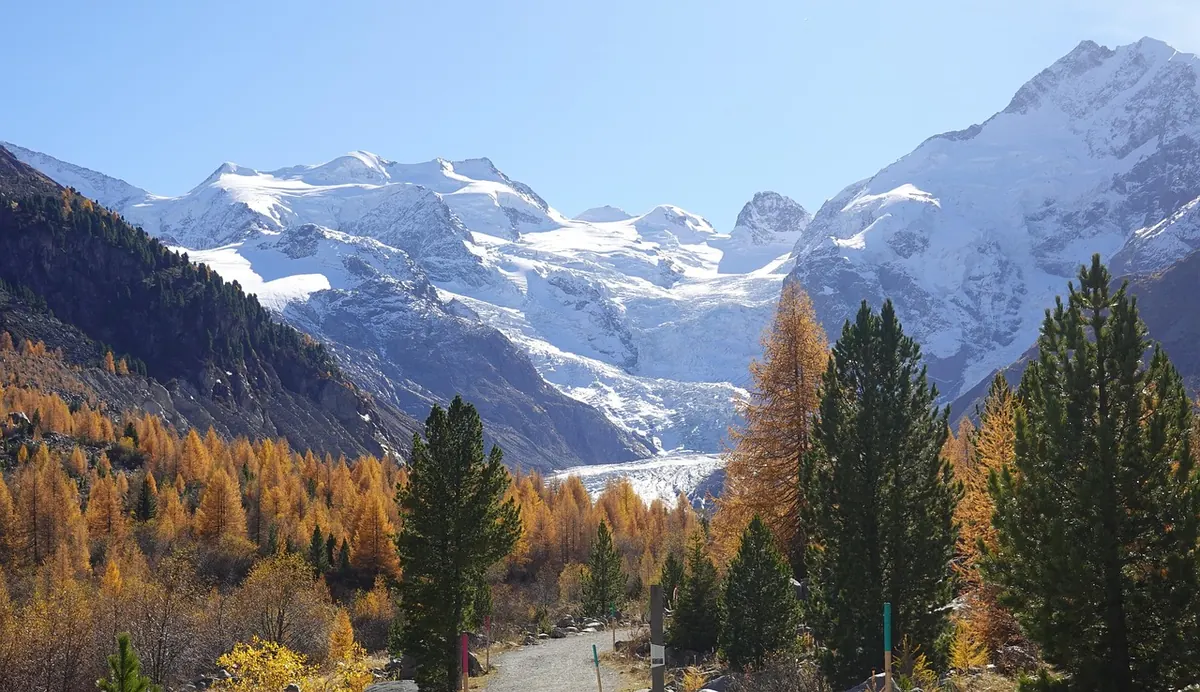
Larches are among the most rewarding conifers a British garden can hold. They establish quickly, they turn amber and gold in October, and their bare winter silhouettes are worth the space on their own. They are also quietly unforgiving. Most larch problems trace back to a decision made on planting day, or to a mismatch between the tree and the ground it went into.
None of it is difficult to get right. It simply helps to know where the traps are.
Expecting It to Behave Like a Spruce
Larch is a conifer, but it is deciduous. Every autumn the needles colour and drop, leaving a naked framework of branches until spring. Gardeners who have not met a larch before sometimes decide the tree is dying. Others buy one expecting a year-round screen, and are disappointed by December.
A healthy larch drops its needles evenly, after a decent show of colour, and the buds stay tight and sound on the twigs. If the needles go brown in midsummer, or fall from one side only, that is not normal autumn behaviour and it is worth investigating. If you want privacy in January, plant something else beside it — a holly, a yew, or a dense evergreen shrub. And rake the fallen needles onto beds rather than leaving a thick mat on the lawn, where it will smother the grass. The needles are slightly acid and make a useful mulch for rhododendrons and other lime-hating plants.
Planting Into the Wrong Soil
This is the most common cause of a larch that sulks for two years and then dies. Larch wants moist but free-draining ground, ideally a slightly acid to neutral loam. It tolerates a little lime, but it struggles on shallow chalk over rock and it hates heavy clay that sits wet through winter.
Wet roots are more than a growth problem. Waterlogged, compacted ground is where root-rotting organisms such as Phytophthora species do their damage, and a stressed larch has little resistance to offer. On heavy Wealden clay, for example, a larch planted in a shallow hole in November may look fine until the first wet winter, then decline slowly through the following summer, with sparse, yellowing needles and dieback at the tips.
Check before you dig
Dig a hole roughly 30cm deep and wide, fill it with water, and leave it overnight. If the water has drained by morning, you are probably fine. If it is still there, or the sides of the hole are slick and grey, choose another spot — or plant on a gentle mound of improved soil so the roots sit above the water table. Fork compost or well-rotted manure into a wide area around the planting position rather than tipping it into the planting hole alone. Roots need to be able to travel.
A simpler test is to look at what grows well nearby. If rhododendrons, camellias and blueberries thrive, the soil is likely acid enough for a larch. If you are on chalk downland and even the roses need constant feeding, think again.
Underestimating the Space It Needs
A European or Japanese larch in good soil is a big tree. Thirty metres is not unusual in the right conditions, with a broad crown and a root system to match. Even a modest garden specimen will dominate a small plot within fifteen years.
Use your judgement about distance from buildings, drains, boundaries and paving, and err on the generous side. Roots spread well beyond the branch tips — often one and a half times the height of the tree — and a larch planted a metre from a neighbour's fence becomes a conversation you would rather not have. The Arboricultural Association suggests a minimum distance of the tree's mature height from buildings; for a larch, that means 20 to 30 metres. Few domestic gardens can offer that. If your garden is small, a grafted weeping or compact form is a far better choice than a species tree, and it will still give you the autumn colour and the winter skeleton.
Planting-Day Mistakes
Small errors at this stage are hard to correct later. The ones that matter most:
- Planting too deep. The root collar, where trunk meets roots, should sit at or just below the soil surface. Bury it and you invite rot.
- A hole in compacted ground. If the surrounding soil is hard, roots stay in the hole. Loosen a wide circle around the planting spot.
- Letting bare roots dry out. Bare-root larch is best planted between November and March while dormant. Keep roots wrapped and damp, plant within a few days, and heel the tree into a spare bed if you cannot plant straight away.
- Planting in the wrong conditions. Avoid frozen ground and standing water. Mild, workable soil is what you want.
- Skipping weed control. Grass and weeds compete ferociously with a young tree. Mulch 5–8cm deep in a ring around the trunk, keeping the mulch clear of the bark.
- Bad staking. If you stake, use a short stake and a flexible tie that allows some movement. Check the tie each year and remove it once the tree stands on its own.
- Forgetting the after-planting soak. A thorough watering settles the soil around the roots and removes air pockets. Without it, fine roots can dry out even in a wet week.
Overwatering, Overfeeding and Heavy-Handed Pruning
Larch is a pioneer species: it grows fast, on thin soils, in open light. Kindness in the form of daily watering and rich feeding can do harm. A larch on a damp site will not thank you for daily irrigation; it will likely develop root rot. Fertiliser, especially nitrogen-rich feed, encourages soft, sappy growth that is more attractive to aphids and more prone to canker. If the tree looks pale, a mulch of well-rotted compost in spring is usually enough.
As for pruning, larch is not a hedge. It does not regrow reliably from old wood, so heavy cutting back into bare branches leaves permanent stubs and can ruin the tree's shape. Remove only dead, damaged or crossing branches, and do it in late summer or winter. If you need to control size, you have planted the wrong tree.
Choosing the Right Larch for Your Garden
Not all larches are the same. The species most often sold are the European larch (Larix decidua) and the Japanese larch (Larix kaempferi). Both are large. The European larch is faster-growing and has finer, brighter green needles that turn clear gold in autumn. The Japanese larch is slightly slower, with blue-green needles and better resistance to larch canker, making it a safer bet on mild, damp sites.
For smaller gardens, look for grafted weeping forms such as Larix decidua ‘Pendula’ or Larix kaempferi ‘Pendula’, which make graceful, narrow trees that rarely exceed 6 to 8 metres. Dwarf cultivars like Larix kaemp Photo: artisano / Pixabay