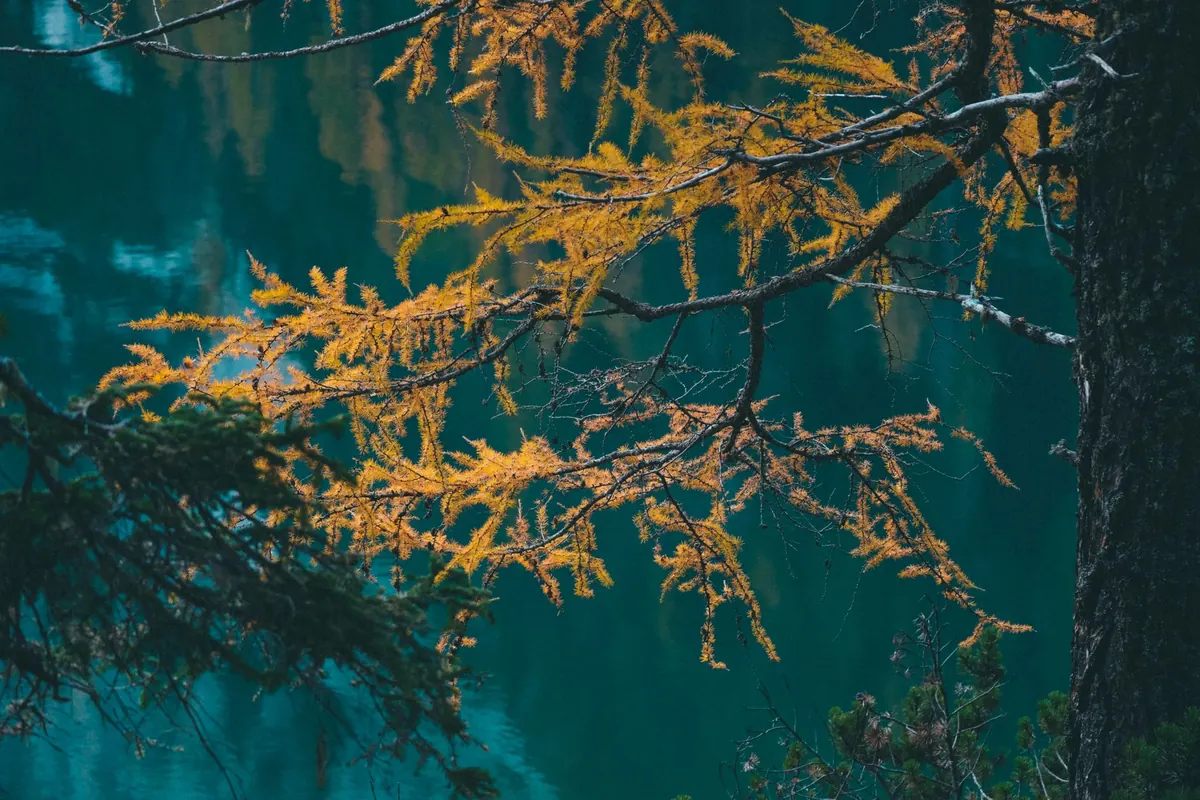
A larch in July looks like any other conifer. In January it is the one conifer wearing nothing at all, and that is exactly when it becomes easy to name. Learn to read the bare branches and you will start finding larch in half the mixed woods in Britain: in the twigs, in the buds, and in the small wooden cones that stay on the tree long after the needles have gone.
Why Larch Gives Itself Away in Winter
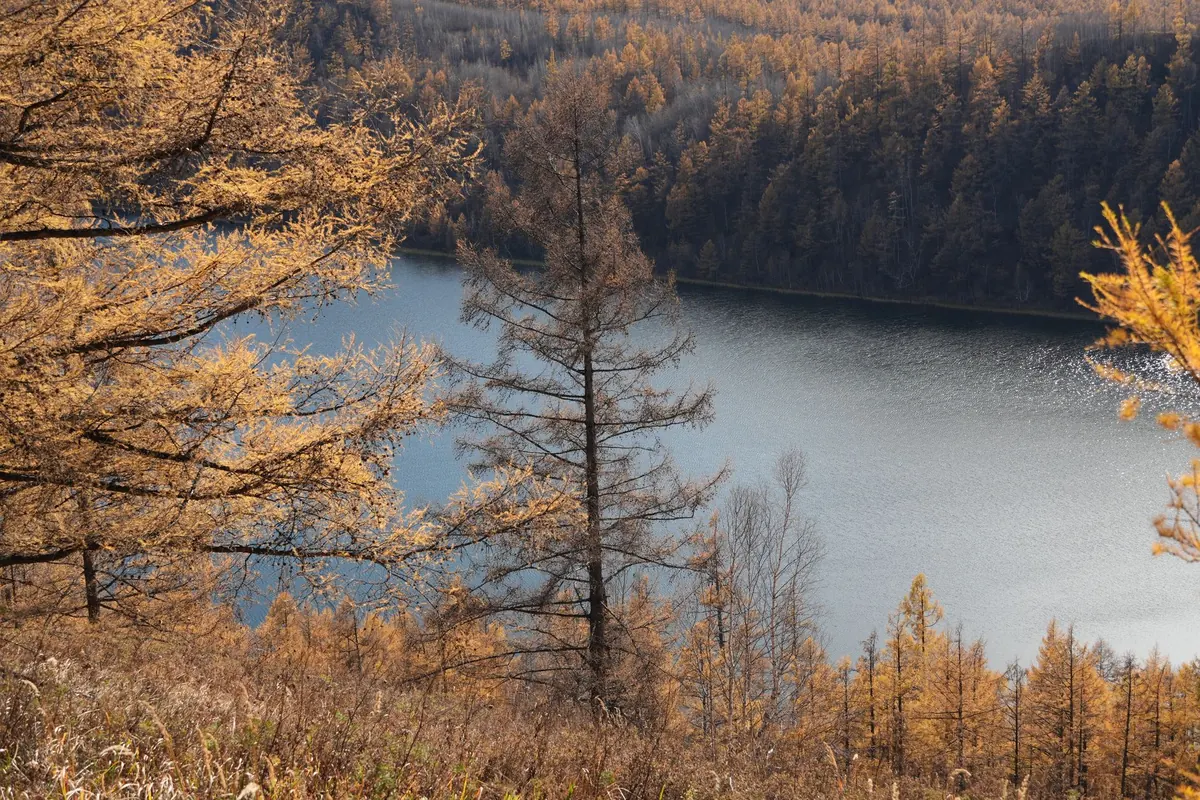
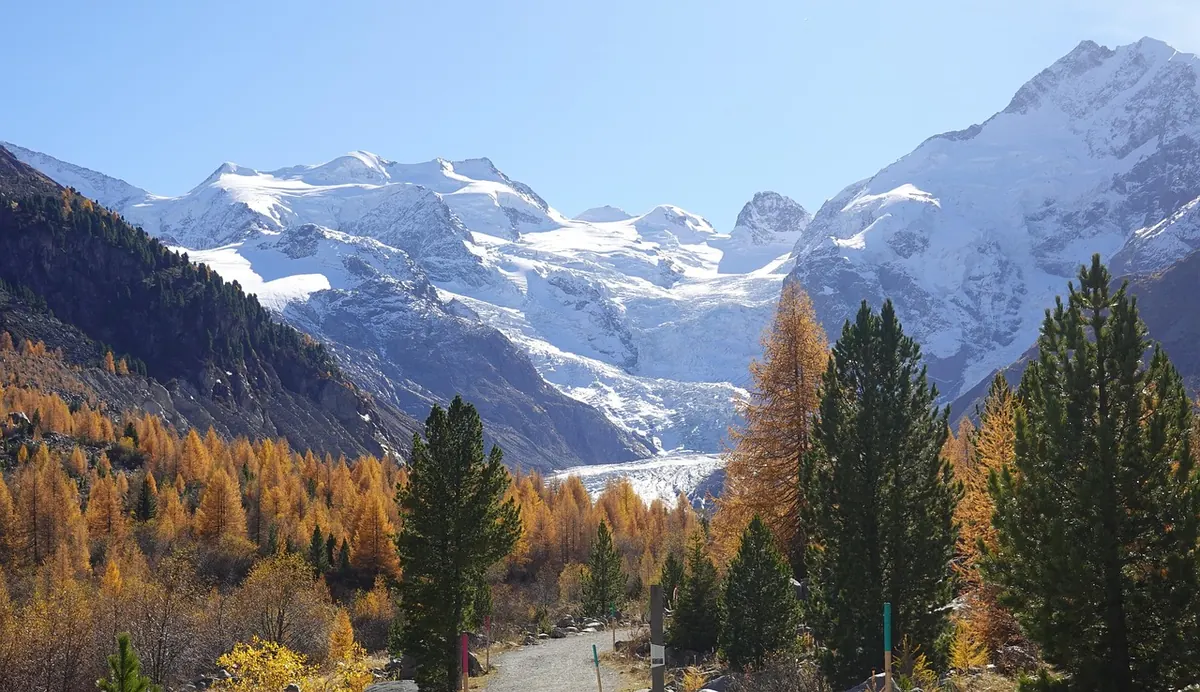
Larch is deciduous. Unlike Scots pine, Norway spruce or Douglas fir, it sheds every needle each autumn, turning soft gold through October and November and standing completely bare by midwinter. So the first clue is a contradiction: a tree with a conifer's shape — narrow, conical, spire-crowned, straight-stemmed — and no green on it anywhere.
If you are standing in front of a bare tree that still reads as a Christmas tree in outline, and there are small woody cones on the branches or beneath your boots, you are almost certainly looking at a larch.
Start With the Outline
Winter larches look light and twiggy. Fine branches and masses of slender shoots give the crown a hazy, purplish-grey cast from twenty paces, quite different from the heavy, solid mass of an oak or a sycamore.
European larch tends to be the tidier of the two common species, with an upright, narrow crown and branches sweeping upward. Japanese larch is broader and more relaxed, its branchlets drooping slightly, the whole tree softer in silhouette. Neither is neat, and old trees can be gaunt and open, with dead stubs low down and gaps where limbs have gone. If the shape says conifer but the colour says November, keep going.
The Twigs Are the Real Giveaway
Put a twig in your hand and larch stops being a guess. Needles grow in clusters on short woody shoots — pegs or spurs — and those pegs stay on the twig after the needles fall. They are crowded along the shoot and make it feel knobbly and uneven, like a miniature rasp. Nothing else common in a British wood feels quite like that.
Look for:
- Peg-like spurs in rows along the twig, each with a small round bud at its tip.
- Twig colour: pale straw-yellow or grey-brown on European larch; warmer reddish-brown, often with a bluish bloom, on Japanese larch.
- Fine, flexible shoots with a slight zig-zag, rather than the stiffer, straighter twigs of spruce.
- No needles at all. A bare branch carrying cones or spurs is the confirming detail.
Cones Do the Work of Certainty
Female cones are small and egg-shaped and sit upright on the twigs, often in pairs or loose clusters. They persist for a year or more, so in midwinter you will usually find old grey-brown cones still attached, plus a scatter of fallen ones in the leaf litter. Pick one up and compare the scale edges; that is where the species separate.
European larch (Larix decidua)
Cones roughly 2.5–4cm long, oval, with scale edges that are smooth and straight, lying flat against the cone. Older cones fade to pale grey-brown and open up like small wooden flowers.
Japanese larch (Larix kaempferi)
Cones similar in size or a touch smaller, but the scale edges curl outward, giving the cone a ruffled, knobbly surface that some people compare to tiny rose thorns. The shoots are strongly reddish, which helps when cones are high out of reach.
Dunkeld or hybrid larch
The naturally occurring hybrid between the two, widely planted in commercial woods. Its cones sit somewhere between the parents, often with slender bracts poking out between the scales like little tongues. If a larch looks unusually vigorous with a straight, clean trunk, this is a fair bet.
Buds and Bark Complete the Picture
Larch buds are small, rounded and reddish-brown, tucked onto the pegs — nothing like the long, glossy, pointed buds of beech or the sooty black buds of ash. On long shoots you will find a small terminal bud; on the short spurs, buds sit neatly at the tip of each peg.
Bark is another quiet confirmation. Young larch has smooth grey-brown bark that later splits into scaly, fissured plates, with a reddish tone showing in the cracks. Follow the trunk upwards: a straight, tapering stem, often clear of branches for the first few metres. That clean lower trunk is a plantation habit and a useful hint when you are scanning a row of bare trees from a track.
A Quick Winter Checklist
- Confirm there is no foliage — not one needle anywhere on the tree.
- Check the outline: conical and conifer-like, but grey and twiggy rather than green.
- Roll a twig between your fingers and look for rows of woody pegs.
- Scan for cones on the branches, then check the ground beneath the canopy.
- Compare cone scale edges: flat and smooth, or curled and ruffled.
- Note twig colour: straw-yellow suggests European, reddish suggests Japanese.
- Check the buds: small, round and reddish-brown, not large and glossy.
The Other Bare Conifers
Two other deciduous conifers turn up in British parks and gardens, though far less often than larch: dawn redwood and swamp cypress. Both shed their needles, so both can stop you in your tracks. Neither has larch's woody pegs along the twig. Dawn redwood carries its buds in opposite pairs and produces small, almost spherical cones; swamp cypress has softer, feathery-looking shoots and round cones on short stalks. If your bare conifer has no pegs and no egg-shaped upright cones, you have found something more interesting than a larch.
Go Back in Spring to Confirm
Winter identification is a provisional verdict, so make a note of the tree and return in April or May. By then the pegs will be carrying tufts of soft green needles, and the female cones will be small and pinkish-red before ripening to brown. That spring visit settles the question for good, and the tree will be far easier to find again once it is the only conifer in leaf that looks like a bottle brush.
Two practical habits help. Photograph the cone, the twig and the whole tree rather than snapping off branches, and keep to public paths — most larch you will meet grows on private or managed land, and cones are easy to pick up from the ground without touching the tree at all.
Photo: Francesco Ungaro / Pexels